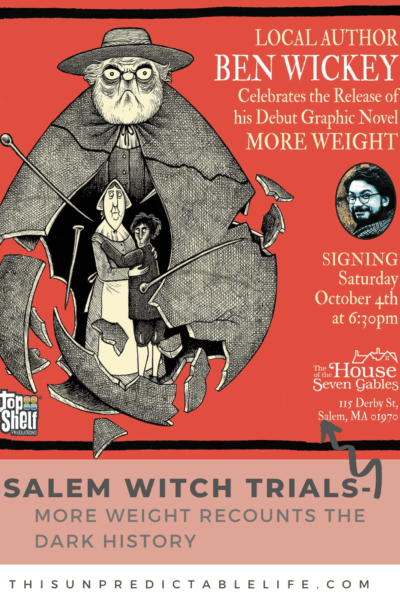

Salem Witch Trials- More Weight Recounts the Dark History

More Weight Recounts the Dark History of the Salem Witch Trials which will be releasing on September 23rd.
“The most insightful, beautifully crafted, and impressively researched dramatization of America’s founding frenzy that exists in any medium, and a perfect illustration of why bloody-minded Northampton men should never set foot in the New World. An appalling masterpiece.”— Alan Moore
“Shot through with tragedy and dark humor, this ambitious volume makes readers feel the weight of history.” “In his impressive first solo graphic novel, animator Wickey (Supper with the Stars) does for Salem, Mass., what From Hell did for London, building layers of history around a crucial act of evil.” — Publishers Weekly
More Weight Recounts the Dark History of the Salem Witch Trials
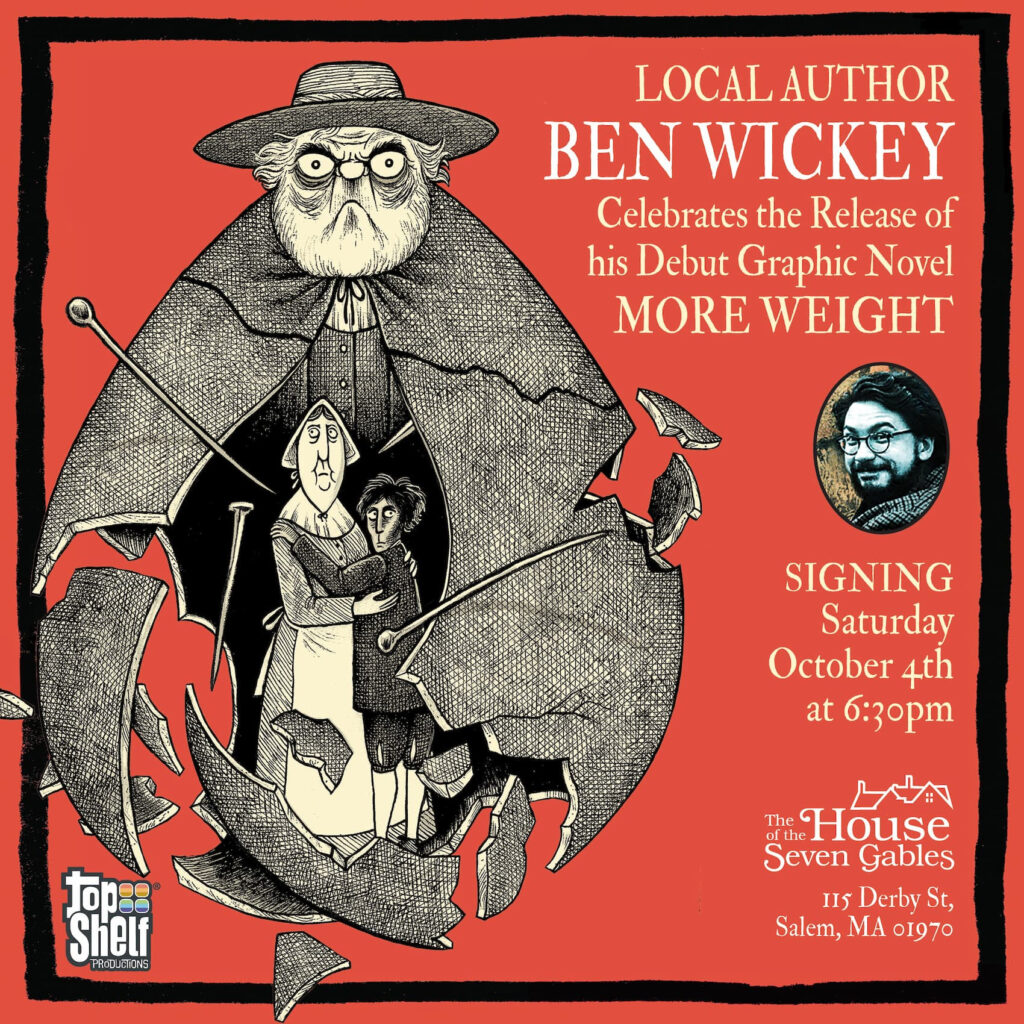
Releasing September 23, More Weight is the debut graphic novel from Ben Wickey – an eye opening read of a horrifying series of events. Wickey has crafted a stunning work of historical fiction featuring beautiful artwork and HAND LETTERED!
Ben Wickey is a Massachusetts-born artist, writer, and animator. He is one of the contributing illustrators of Alan Moore’s The Moon and Serpent Bumper Book of Magic, the illustrator of Ki Longfellow’s The Illustrated Vivian Stanshall, and the director of several stop-motion animated short films, including the award-winning The House of the Seven Gables.
“Every word is an accusation…and every whisper kills.” This staggering graphic novel explores the infamous Salem witch trials and the long shadows they cast more than 300 years later.
In Salem, Massachusetts, 1692 is a year of terror. When accusations of witchcraft plunge the community into paranoia and death, curmudgeonly farmer Giles Corey and his great-souled wife Martha are forced to confront their troubled pasts, fighting to hold onto their principles even at the cost of their lives. In the 1860s, famed writers Nathaniel Hawthorne and Henry Wadsworth Longfellow stroll the streets of Salem together, reflecting on their own dark connections to those wicked days. Today, graphic novelist Ben Wickey wrestles with the complex legacy of “the Witch City” and what it shows us about the best and worst of humanity.
Based on true events, set in three centuries, and hand-drawn over a decade, More Weightis a stunning visual symphony — a unique and profound inquiry into the infamous Salem witch trials and the long shadows they still cast on us all.
Appearances:
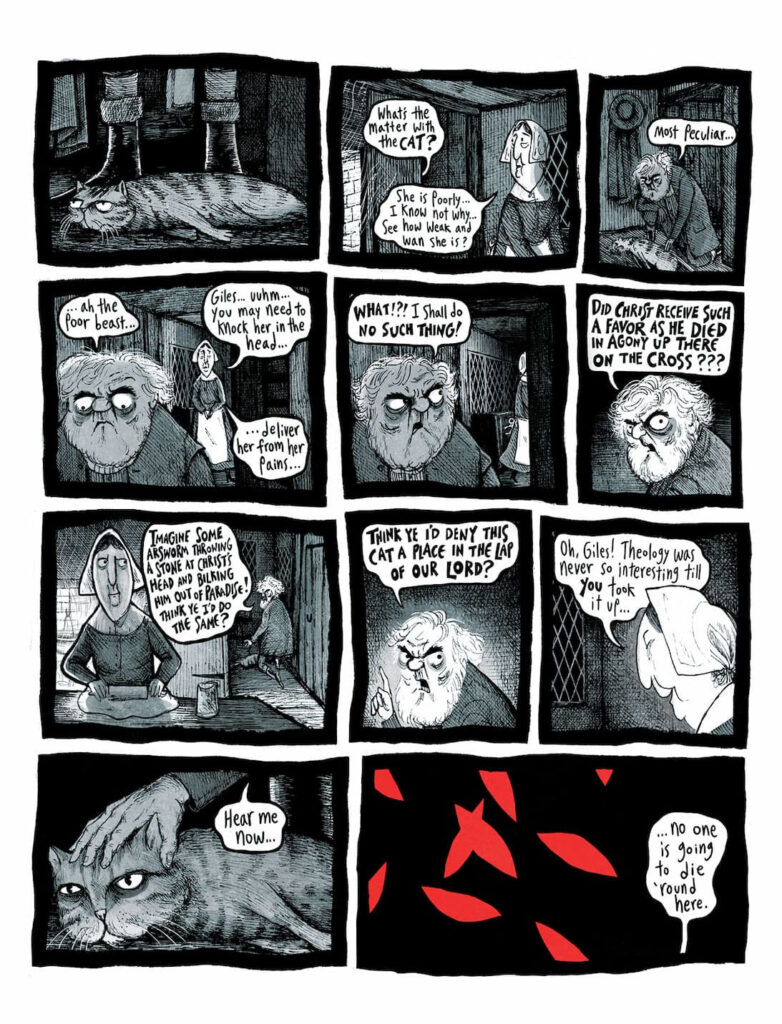
Preview Page 1
Follow on Their Social Below:
Facebook | X | Instagram | Tik Tok | YouTube | LinkedIn | ID | Top Shelf |
To Add a Bit of History of the Salem Witches You Can Read Below.
The Salem Witch Trials: A Brief History
Background
The Salem Witch Trials took place in 1692–1693 in the Puritan community of Salem Village (present-day Danvers, Massachusetts). At the time, New England was marked by strict religious beliefs, political instability, and fear of the devil’s influence. Superstition and suspicion were common, and accusations of witchcraft were often used to explain misfortune, illness, or conflict.
The Beginning
The events began in January 1692, when several young girls in Salem Village—including Betty Parris (age 9, daughter of the local minister Samuel Parris) and Abigail Williams (age 11, his niece)—began experiencing strange fits, screaming, and contortions. A local doctor, unable to find a physical cause, declared the girls were under the influence of witchcraft.
Soon, the afflicted girls accused several women in the community of bewitching them. Among the first accused were Tituba (an enslaved woman in the Parris household), Sarah Good (a homeless woman), and Sarah Osborne (an elderly woman with a poor reputation).
The Trials
The accusations quickly spread, and fear overtook the community. The colonial government set up a special court called the Court of Oyer and Terminer to hear the cases. “Spectral evidence” (testimony that a spirit or apparition of the accused had harmed someone) was accepted as valid, even though it was intangible and unverifiable.
Between June and September 1692, the court convicted and executed 20 people:
- 19 were hanged, including Rebecca Nurse and John Proctor, who both maintained their innocence.
- 1 man, Giles Corey, was pressed to death with heavy stones after refusing to enter a plea.
In addition to these executions, more than 200 people were accused, and many others languished in jail under harsh conditions.
The End of the Trials
By late 1692, doubts began to surface. Prominent ministers, including Increase Mather, argued that reliance on spectral evidence was dangerous. Governor William Phips, whose own wife was accused, eventually dissolved the Court of Oyer and Terminer in October 1692 and replaced it with a more cautious court. This new court did not accept spectral evidence, leading to far fewer convictions.
In 1693, Governor Phips pardoned many remaining prisoners, effectively ending the trials.
Aftermath and Legacy
The Salem Witch Trials left deep scars on the community. In the years that followed, many of those involved expressed regret for their roles. In 1697, a day of fasting and prayer was held to seek forgiveness. Later, in the 18th and 20th centuries, the accused and executed were officially exonerated.
Today, the trials are remembered as a cautionary tale of mass hysteria, scapegoating, and the dangers of a justice system that disregards evidence and fairness.